

Several years ago, I visited an archaeological site in South Africa with my cohort of Atlantic Fellows for Racial Equity. I remember standing there, looking at inscriptions left behind by people who had inhabited the land long before us. What we now experience as caves were once places where human beings communicated, remembered, taught and interpreted the world around them.
Equity work requires more than identifying what is wrong with the world as it currently exists. We have to be able to imagine what does not yet exist. Stories help us do that.
Our ancestors were storytellers. Across cultures, they were griots, jalis, guewels, arokins and jawals. They understood something we sometimes forget in our fascination with new technology: humans have always searched for ways to preserve memory and transmit meaning. Remembrance is not simply about looking backward. It gives us material with which to imagine forward.
I thought about that experience again this summer.
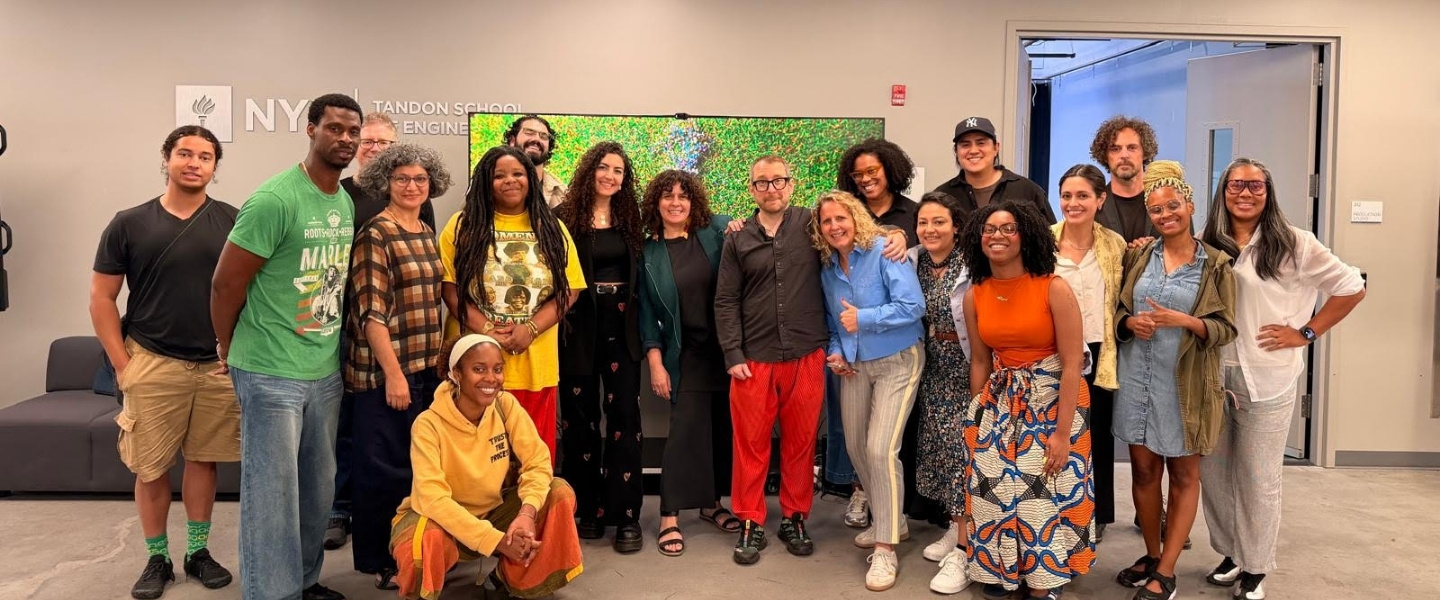
Through a nomination from the Atlantic Institute, I was invited to participate in a five-day immersive residency in New York City with AGOG: The Immersive Media Institute, an organization that supports creators and nonprofits using emerging technology to create human connection, cultivate empathy and inspire action toward a more just and sustainable future.
We began the week with a writing prompt about remembrance and what was described as the physics of nostalgia. It was an unexpectedly fitting way to begin a week exploring extended reality, or XR.
Our cohort of roughly 17 people represented a spectrum. Some of us were curious novices. Others were seasoned XR storytellers looking to deepen their skills or expand their creative networks. But we all learned and practiced together, simultaneously and at our own pace. We experimented with tools including 360 cameras and 3D printing, encountered new ways of thinking about immersive storytelling, and frequently finished sessions with more questions than answers. That felt appropriate. We were learning at a frontier.

The experience also felt like a continuation of my journey as an Atlantic Fellow. The Atlantic fellowship has repeatedly placed me in communities where people working in different disciplines, countries and contexts are connected by a belief that a more equitable world is possible. My trip to South Africa emerged from that community. Years later, so did my opportunity to participate in the AGOG residency. In both places, I found myself thinking about the relationship between memory, imagination and justice.
Equity work requires more than identifying what is wrong with the world as it currently exists. We have to be able to imagine what does not yet exist. Stories help us do that.
As technology evolves—not without complications—we should become acquainted with new modalities for telling those stories. The week at AGOG introduced me to tools that can expand how we communicate, reach younger audiences and perhaps even stretch the boundaries of our own imaginations. And core to an equitable work is being able to imagine what we have not yet experienced.
But what stayed with me most was not a particular device or piece of technology. It was the people learning alongside me.
One participant was exploring how XR could encourage people to grow and eat natural foods on farms in Jamaica. Another, an architect by training, used our work with 360 cameras to document a public art project her organization had created in New York City. I arrived as the curious novice, wondering how these technologies might become an extension of my own writing. A guest facilitator—a journalist using XR to tell human-centered stories of struggle and triumph—helped me see some of those possibilities more clearly.
The tools have changed. The human impulse has not.
By the end of five days, we were genuinely sad to leave one another and return to our separate creative worlds. The cohort made unfamiliar technology less intimidating. When someone used terminology I did not understand, or when I could not quite figure out how a 3D printer worked, I was surrounded by people willing to learn with me.
I left AGOG thinking again about those caves in South Africa.
The tools have changed. The human impulse has not.
We are still trying to leave something behind that says: This is what we saw. This is what we experienced. This is what mattered to us. And hopefully, if we tell the stories well enough, this is what those who come after us might build differently.
About the author
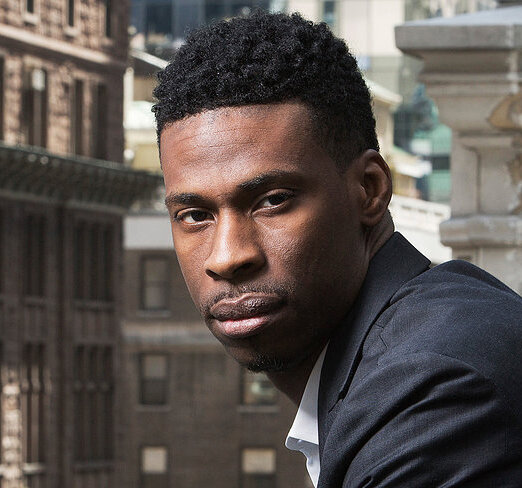
Marlon Peterson is a senior Atlantic Fellow for Racial Equity and founder and principal of Precedential Group Social Enterprises, where he advises institutions in philanthropy, justice and workforce transformation through the Precedential Method — a framework for recognizing capability forged under constraint that institutions routinely misclassify as deficit. He is the author of "Bird Uncaged," a memoir of coming of age in Brooklyn and incarceration, as well as a playwright and TEDx speaker.


.png)

