

.jpg)
When we talk about transitioning to a low-carbon economy, we are really talking about people. For me, as the founder of Green The Church, a non-profit dedicated to environmental justice within the Black church community based in Oakland, California Bay Area, the work begins in communities that have long carried the heaviest burdens of pollution, disinvestment and climate vulnerability.
Houses of worship are trusted institutions, and they have the power to educate and organize communities around energy efficiency, clean technology, sustainable practices and economic opportunity.
Green The Church is a national movement working at the intersection of faith, environmental justice and community resilience. We partner primarily with Black churches — not because they are the only ones who care, but because they are trusted institutions rooted in communities that have borne disproportionate environmental harm.
For generations, Black churches have sat where pollution, disinvestment and neglect converge. Climate change, for these communities, is not abstract. It shows up as asthma, as heat deaths, as power outages, as elders choosing between medicine and electricity.
Environmental justice is not separate from social justice. In many Black and marginalized communities, we are on the frontlines of climate change while often being the last to benefit from clean air investments, green infrastructure, or renewable energy opportunities. A just transition must ensure that those most impacted are not left behind but centered in solutions.
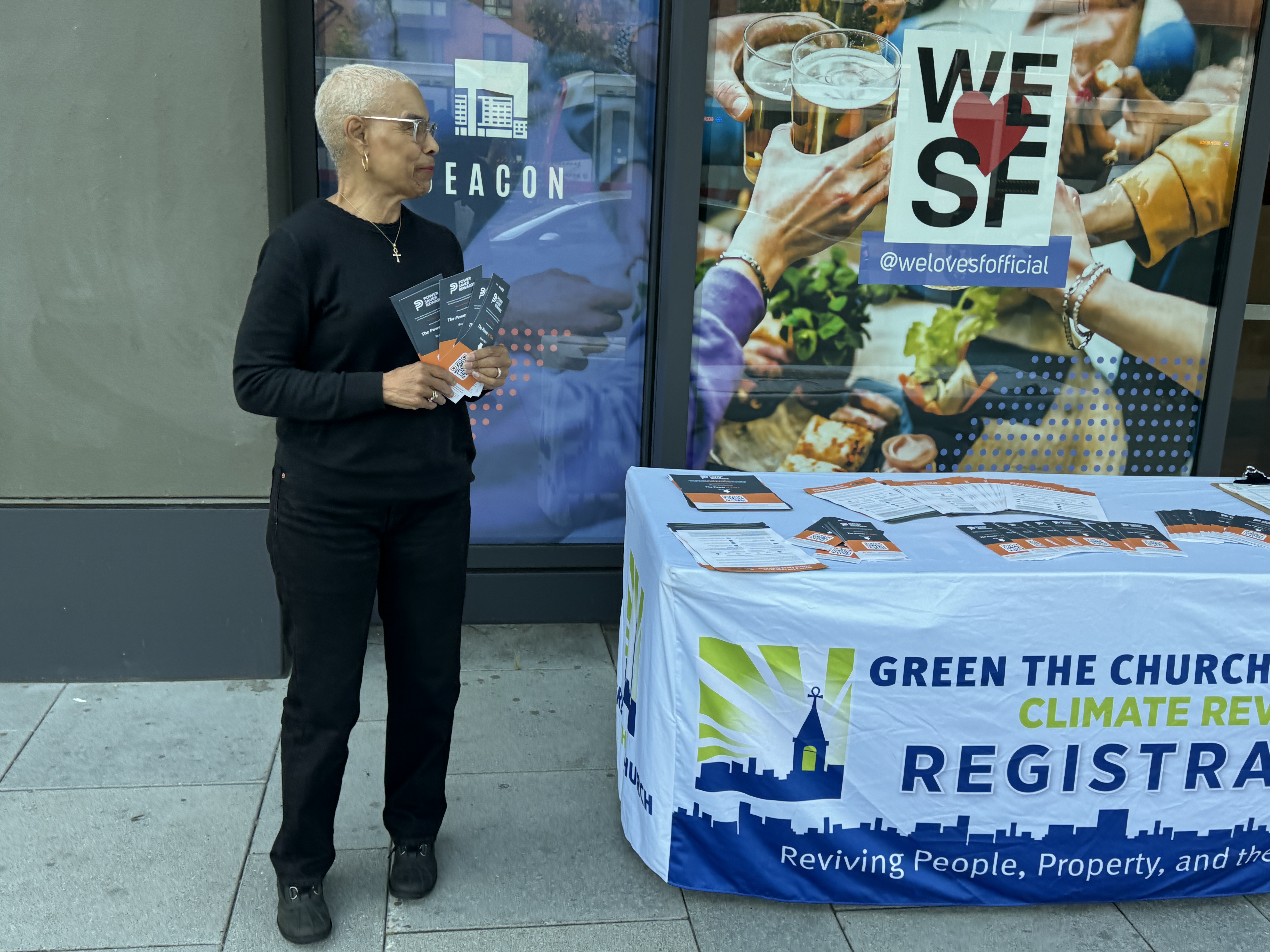
Through Green The Church, we mobilize congregations and faith leaders to see climate care as sacred work. Houses of worship are trusted institutions, and they have the power to educate and organize communities around energy efficiency, clean technology, sustainable practices and economic opportunity.
We focus on equipping communities with the tools to reduce their carbon footprint while also building resilience and wealth, from advocating for healthier neighborhoods to supporting pathways into green jobs and entrepreneurship. When environmental sustainability is paired with health equity and economic opportunity, we begin to repair historic inequities while preparing for a thriving future.
Strengthening a just transition means creating systems where clean energy lowers utility bills for families, where green jobs are accessible and well-paid, and where children grow up breathing cleaner air. For me, this work is rooted in moral responsibility and collective care. The repair of the world has never belonged to one people, or one faith alone. It has always required courage, humility and shared responsibility. Climate action is not only about protecting the planet; it is about protecting people. A sustainable future must be one where dignity, opportunity and environmental health belong to everyone.
About the author
Atlantic Fellow for Racial Equity, Rev. Dr. Ambrose Carroll, champions environmental justice and sustainability as a practical theologian, founder of Green the Church and member of the National Environmental Justice Advisory Council.


.png)

