


By Harpinder Collacott, Mohammed-Anwar Sadat Adam and Tanya Charles
The global order is not collapsing. It is being renegotiated. From the conflict raging across the Middle East to recent climate talks, one theme keeps emerging: frustration. Policymakers across the globe observe that multilateralism is being sidelined in favor of unilateral action. International norms set through international law are being disregarded. What we are witnessing is not simply competition between global powers, but a shift in the way that nations are pursuing their goals, determining trade, security, global health and climate controls on emissions.
The real question is how to redesign a system of international cooperation that operates as well politically as it does technically.
At the heart of the debate about why this change has occurred, we must first make the distinction between “internationalism” and “multilateralism.” Internationalism is the belief that countries should cooperate to address shared challenges, while multilateralism is the method for delivering it—through institutions, treaties and forums. Decades-old assumptions about why countries should work together are now contested and the machinery for delivering this multilateral approach is faltering.
The result is what some have called “zombie multilateralism”: institutions that continue to operate while losing their political legitimacy. These tensions are pushing countries toward competing systems, fragmented alliances and ad hoc “mini-lateral” groupings. Yet abandoning multilateral cooperation is not an option. The world’s problems—climate instability, technological disruption and financial volatility—are too interconnected.
The real question is how to redesign a system of international cooperation that operates as well politically as it does technically. To do this, different nations and states need to work in solidarity with others to reimagine, redefine and co-create frameworks for international cooperation, and dismantle any current structures ill-suited for future needs.
We propose these foundational pillars for a new system—a new internationalism:
- A stronger voice for emerging and developing economies in global financial governance. Reforming IMF quota shares, improving sovereign debt restructuring—including private creditors—and deploying Special Drawing Rights more creatively for climate and development finance would make the system more responsive and credible.
- Climate risk and development finance must be more aligned. Currently, developing countries face the worst impacts while paying the highest borrowing costs. Mechanisms such as blended finance should only be used if they meet strong development-effectiveness criteria, support pro-poor outcomes and are fully transparent.
- By updating the trade rules, the global economy would reduce the risk of countries fragmenting into hardened trade blocs. This would mean addressing digital commerce and industrial subsidies—while allowing flexible, issue-based agreements when universal consensus proved impossible.
- Better global regulation for advances in artificial intelligence, being mindful of the risks while also fostering opportunities for transforming lives for the better. Industrial innovations too should be part of the multilateral agenda as without cooperative frameworks and shared standards, subsidy races and technological fragmentation will intensify.
Institutional reform alone will not be enough. Multilateralism has long been treated as a technical “backroom” issue—something negotiated by diplomats and economists far removed from public debate. Yet the forces destabilizing global cooperation today are deeply political: inequality, technological disruption and the perception that global rules benefit elites rather than ordinary citizens. Paradoxically, inequality and artificial intelligence, the two issues that threaten democracies, are also those viewed by the public as needing a multilateral approach and better global governance. Solutions to address the growing inequality gap in many countries demand international cooperation to implement fairer tax systems and reduce the risk of illicit financial flows.
The goal is not to defend the old order, nor to abandon global cooperation altogether. It is to redesign and reframe it so it is fit for the current era.
Artificial intelligence presents a parallel challenge. As the United States and China race to dominate AI technologies, concerns are growing about algorithmic discrimination, economic displacement, and the concentration of technological power. Sovereign technology efforts can strengthen inclusion by aligning digital systems with national needs, but they may also widen global inequalities as countries with stronger data, infrastructure and talent move ahead faster than others, creating uneven access to digital benefits.
Inequality and artificial intelligence are issues are perceived by the public as areas of concern and illustrate why global cooperation must evolve beyond elite forums. If systems of international cooperation can reconnect with the everyday concerns of citizens over issues such as jobs, security, fairness and technological change, they could regain some of the legitimacy gradually lost.
The goal is not to defend the old order, nor to abandon global cooperation altogether. It is to redesign and reframe it so it is fit for the current era. For example, in the values underpinning international cooperation, while human rights remain essential, many participants argue that human dignity has become a more effective political language for mobilizing public support. Concepts such as solidarity, equality, justice, fairness, and the well-being of people and planet offer a broader narrative, one capable of countering the increasingly narrow and transactional vision of global politics.
In summary, we need cooperation in a world globally networked like never before. But to build a new internationalism, we need it to be more representative, more politically grounded, and more capable of addressing the urgent challenges of our time.
About the Authors
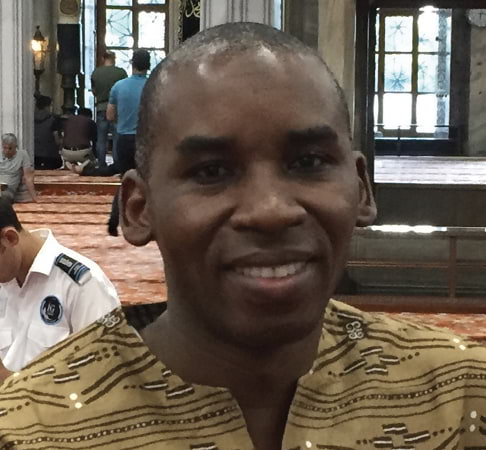
Mohammed-Anwar Sadat Adam is an Atlantic Fellow for Social and Economic Equity and is currently the Programs and Policy Influencing Lead for Oxfam. He works with civil society in designing national, regional and global influencing strategies, coalition- and network-building to influence governments, international institutions, private sector and other institutions.
Harpinder Collacott is Director of Innovations and Partnerships at the Atlantic Institute, driving high-impact collaborations that enhance the organisation’s influence, sustainability and strategic direction. A highly respected leader in the international development sector, her career spans senior roles at Mercy Corps, Development Initiatives and 4Thought Social Ventures. With a proven track record in strategic leadership, operational management and external engagement, Harpinder most recently served as Interim Executive Director of the Global Public Investment Network.
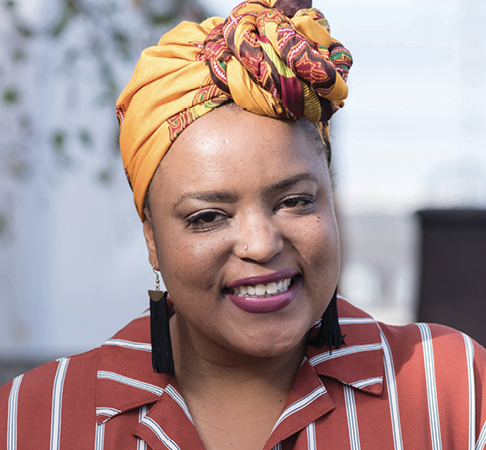
Tanya Charles is an Atlantic Fellow for Social and Economic Equity and the Senior Program and Impact Lead at the Atlantic Insitute. She provides strategic support to the Global Atlantic Fellows Advisory Board, manages the flagship Global Atlantic Fellows Annual Convening, and developes programming (webinars, skills training and place-based) for Atlantic Fellows and staff. As an African feminist, Tanya has years of experience working to advance women’s rights, gender equality and social justice across Africa and globally. She has expertise in research, policy development, curriculum design and relationship management. She holds a Master’s degree in Social Sciences and Inequality from the London School of Economics and a Master of Philosophy in Justice and Transformation (Human Rights Law) from the University of Cape Town in South Africa.


.png)

